Friday, July 29, 2022

Arthro-Pod EP 118- The World of Carnivorous Plants Part 2

Today we conclude our deep dive into the world of carnivorous plants. Mike has been reigniting his passion for these bug eating botanical wonders. Join us as we finish the tour of families of carnivorous plants and the different types of traps they have. 


Roridula dentata in the wild. Photograph by Nick Helme via iNaturalist, used under a CC BY-NC 4.0 license.

Roridula dentata flowering in the wild. Photograph by Nick Helme via iNaturalist, used under a CC BY-NC 4.0 license.

Roridula flower. Note the sticky hairs on the leaves. Photograph by Sönke Haas via Flickr, used under a CC BY-ND 2.0 license.


Pamerida bug amongst the sticky tendrils of a Roridula plant. Photograph by tonyrebelo via iNaturalist, used under a CC BY-SA 4.0.

Pamerida bug and numerous prey captured by a Roridula plant. Photograph by felix_riegel via iNaturalist, used under a CC BY-NC 4.0.

Close up dorsal view of a Pamerida bug . Photograph by felix_riegel via iNaturalist, used under a CC BY-NC 4.0.


Cobra lilies. Note the red fishtail appendages. Photograph by pnwdunning via iNaturalist, used under a CC BY-NC 4.0 license.


Cobra lilies growing in a shaded environment. Photograph by paulexcoff via iNaturalist, used under a CC BY 4.0 license

Darlingtonia growing in the ditch along a gravel road. Photograph by joysavoie via iNaturalist, used under a CC BY-NC 4.0 licnese

The last thing an insect sees as it enters the trap of a cobra lily. Note how the fenestra allow light to enter the bulbous portion of the trap and make it much brighter compared to the surrounding plant. Photograph by sethberes via iNaturalist, used under a CC BY-NC 4.0 license.

Heliamphora chimantensis grown in culture. Photograph by Andreas Eils via Wikimedia Commons, used under a GNU Free Documentation License.

Heliamphora nutans growing on a cliffside. Photograph by thierrycordenos via iNaturalist, used under a CC BY-NC 4.0 license.

Heliamphora nutans growing amonst grasses and other tall competitor plants. Photograph by pfaucher via iNaturalist, used under a CC BY-NC 4.0 license.

Heliamphora pulchella. Note the downward-facing hairs on the inside of the pitchers that help prevent prey from escaping. Photograph by Fernando J. M. Rojas-Runjaic via iNaturalist, used under a CC BY-NC 4.0 license.

Yellow pitcher plants, Sarracenia flava. Photograph by emmatrum vi iNaturalist, used under a CC BY-NC 4.0 license.

Yawning mouth of a yellow pitcher plant. Photograph by wag4ag via iNaturalist, used under a  CC BY-NC 4.0 license.

A field of yellow pitcher plants. Such sights were once common in the Southeastern United States but have become more and more rare in the as the bogs and swamps that pitcher plants need were drained and degraded. Photograph by smoran3030 via iNaturalist, used under a CC BY-NC 4.0 license.

Hooded pitcher plants (Sarracenia minor) have lids that overhang the mouth, which is different from the open mouths of many Sarracenia species. Photograph by celiabyrnes via iNaturalist, used under a CC BY-NC 4.0 license.

Note the fenestrae at the back of this Sarracenia minor pitcher that allow light to shine through and fool insects. This morphology is convergent to the fenestrae of cobra lilies and Albany pitcher plants. Photograph  by florabundance via iNaturalist, used under a CC BY-NC 4.0 license.

Parrot pitcher plants, Sarracenia psittacina. Note the decumbant (lying along the ground) nature of the traps. Photograph by Andrew Lane Gibson via iNaturalist, used under a CC BY-NC 4.0 license.
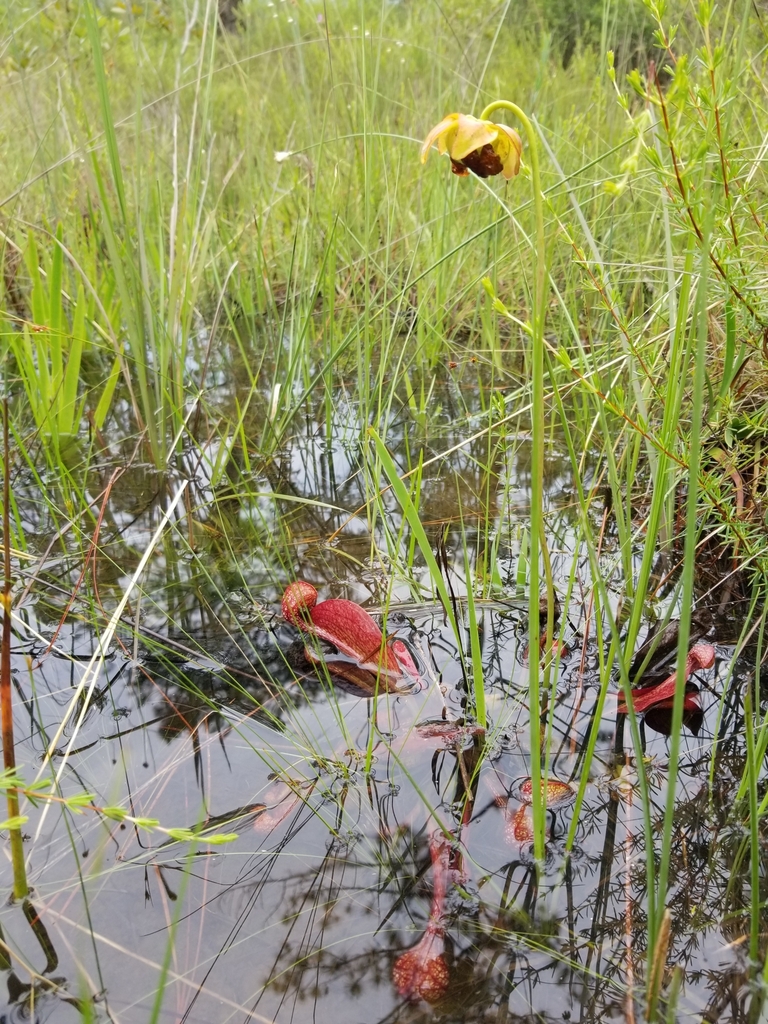
Parrot pitchers are the only speices of Sarracenia to regularly become inundated by water and catch aquatic prey. The decumbant traps may be a modification to trap such prey. Photograph by adamhull via iNaturalist, used under CC BY-NC 4.0 license.

Green pitcher plants (Sarracenia oreophila) are critically endangered in the wild. Photography by Farren Dell via iNaturalist, used unde a CC BY 4.0 license.

White pitcher plants (Sarracenia leucophylla) are amongst the largest and most striking species of American pitcher plants. They are commercially harvested for cut flower arrangements and at risk due to poaching. Photograph by stasialr via iNaturalist, used under a CC BY-NC 4.0 license.

Field of white pitcher plants. Photograph by Jared Gorrell via iNaturalist, used under a CC BY-NC 4.0 license.

Purple pitcher plants (Sarracenia purpurea) are amongst the shortest Sarracenia species. The upturned, ruffled lids are distinctive. They are the most widespread Sarracenia species and are found througout the eastern United States and across Canada, nearly to Alaska. Photograph by Scott via iNaturalist, used under a CC BY-NC 4.0 license.

Sarracenia × catesbaei, a naturally occuring hybrid between S. flava and S. purpurea. Note the intermediate characteristics this hybrid had between the two parent species. Photograph by Rich Stevenson via iNaturalist, used under a CC BY-NC 4.0 license.


Byblis liniflora, one of the annual rainbow plant species. Photograph by Geoff Shuetrim via iNaturalist, used under a CC BY 4.0 license.

Byblis liniflora in bloom. Photograph by colbourn via iNaturalist, used under a CC BY-NC 4.0 license.

Byblis gigantea, one of the perennial rainbow plant species. Both perennial species are critically engangered. Byblis gigantea is only known from five populations in the wild. Photographs by Jean Hort via iNaturalist, used under a CC BY 4.0 license.
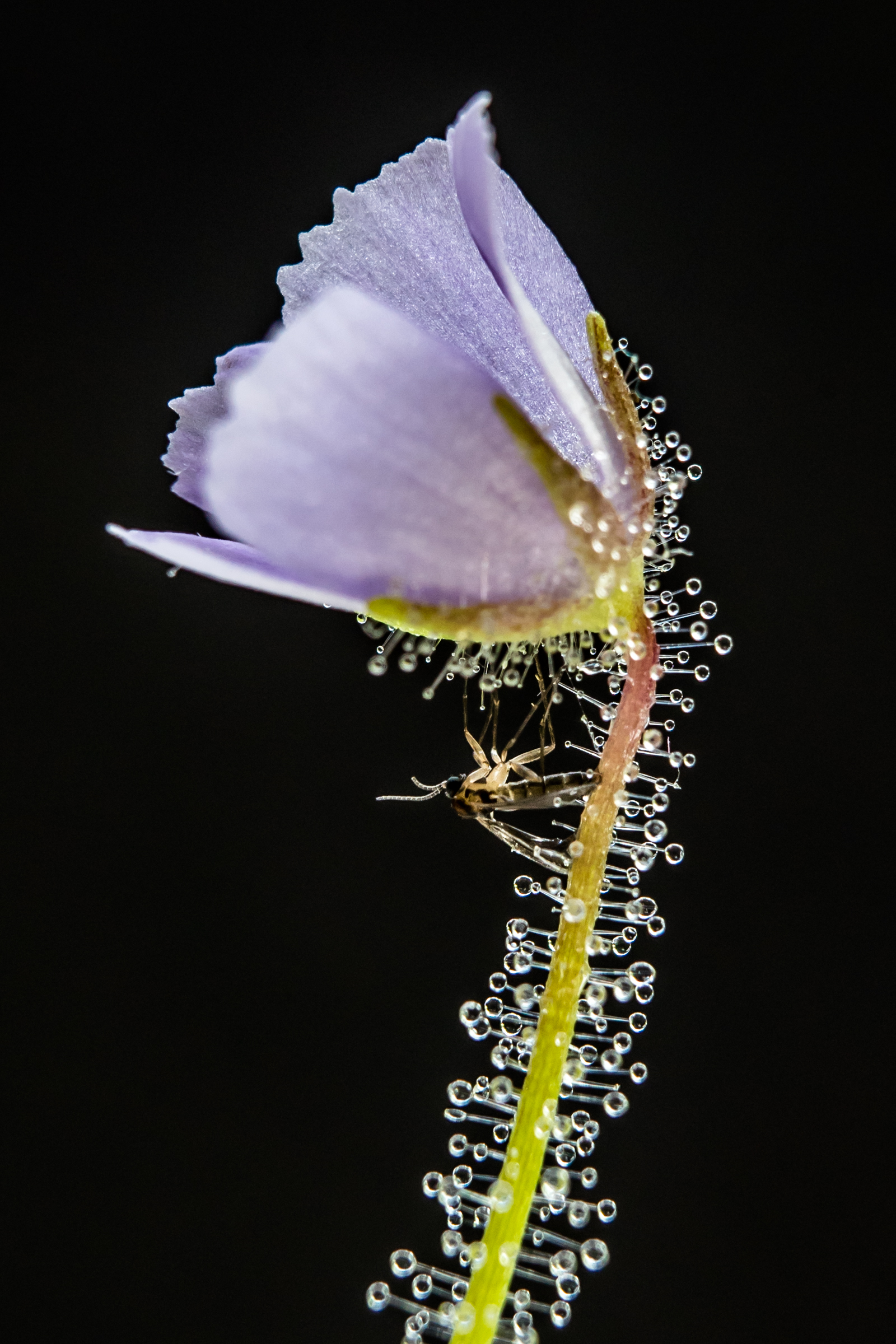
Flower stalk of Byblis liniflora, which has captured a small fly. Photograph by  Boaz Ng via Flickr, used under a CC BY-NC-ND 2.0 license.


Philcoxia rhizomatosa growing in white quartitic sand. The underground leaves have been partially exposed by wind. Photograph by william_hoyer via iNaturalist, used under a CC BY-NC 4.0 license.

Philcoxia rhizomatosa. The leaves are usually concealed under the sand. Photograph by william_hoyer via iNaturalist, used under a CC BY-NC 4.0 license.

Closeup of the sticky underground leaves of Philcoxia. Photograph by william_hoyer via iNaturalist, used under a CC BY-NC 4.0 license.

A common butterwort (Pinguicula vulgaris) in bloom. This species occurs across the Northern Hemisphere in the United States, Canada, Europe, and Russia. Photograph by bjohnston5 via iNaturalist, used under a CC BY-NC 4.0 license.

Pinguicula moranensis, one of the Mexican butterwort species. Photograph by Raymundo Perez via iNaturalist, used uder a CC BY-NC 4.0 license.
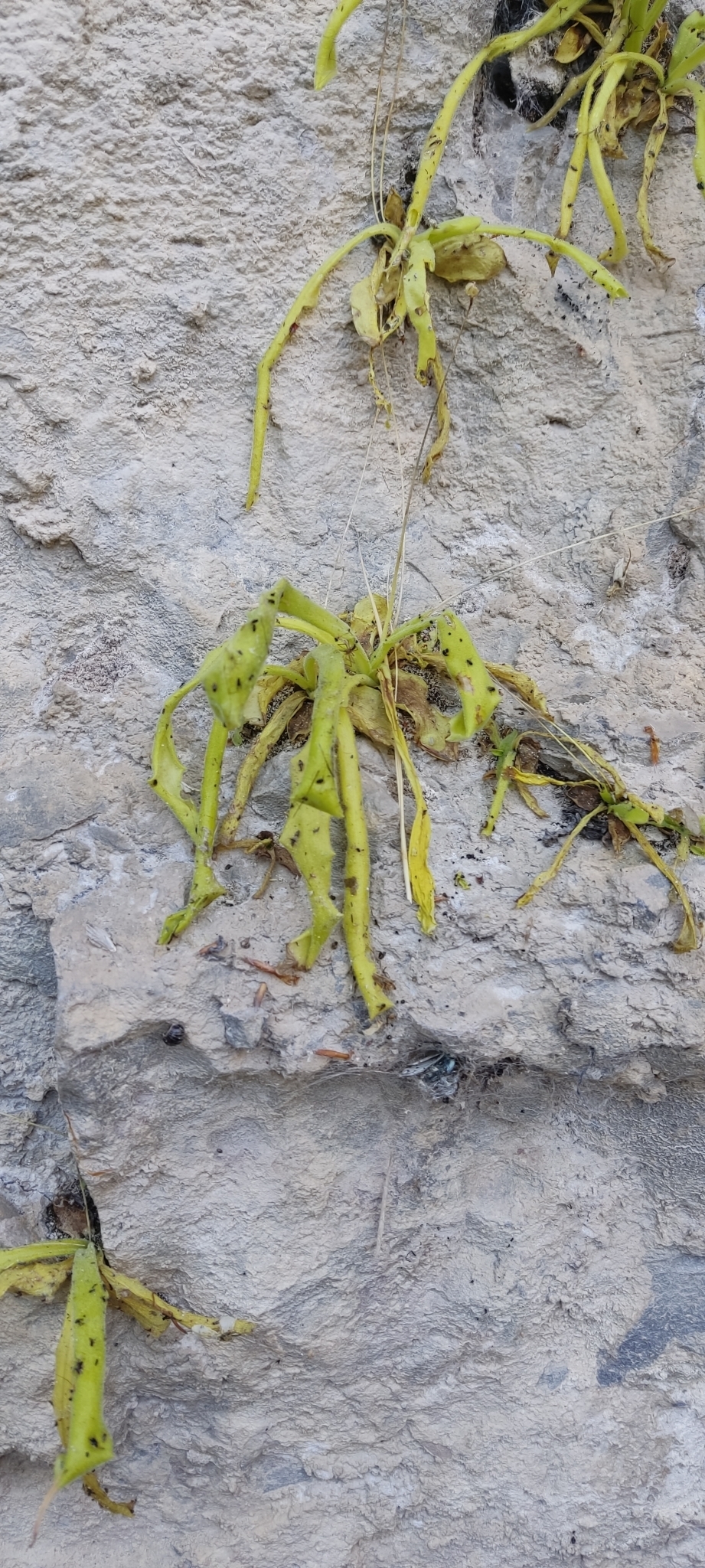
Pinguicula longifolia. Note the long leaves, which are not typical for most butterworts and may be an adaptation to this species' habit of living of cliffs. Photograph by carmensolanas via iNaturalist, used under a CC BY-NC 4.0 license.

The underground trap leaves of Genlisea bifurcate, with the distal ends being corckscrew shaped, hence the common name "corkscrew plant". Photograph by william_hoyer via iNaturalist, used under a CC BY-NC 4.0 license.

The corkscrew-shaped underground leaves of Genlisea are only a few cells thick and very fragile. The traps leaves of this Genlisea filiformis have broken off where they bifurcate. Note the small size of the adult plant. Photograph by Thiago RBM via iNaturalist, used under a CC BY-NC 4.0 license.

Genlisea margaretae. Photograph by Thilo Krueger via iNaturalist, used under a  CC BY-NC 4.0 license.

Genlisea grow in aquatic to semi-aquatic habitats and are thought to require water indundating the traps for the traps to function. Note how these plants are growing nearly submerged. Photograph by william_hoyer via iNaturalist, used under a CC BY-NC 4.0 license. 


Badder trap of Utricularia gibba. Photograph by  Boaz Ng via Flickr, used under a CC BY-NC-ND 2.0 license.

Common bladderworts found in Pennsylvania. Photograph by Michael Skvarla.

Aquatic bladderworts. Photograph by brieaspasia via iNaturalist, used under a CC BY-NC 4.0.

An epiphytic bladderwort. Photograph by  Dr. Alexey Yakovlev via Flickr, used under a CC BY-SA 2.0 license.

Utricularia pubescens can grow terrestrially or lithophyticly (on rocks). Photograph by Padraic Flood  via iNaturalist, used under a CC BY-NC-SA 4.0 license.


Questions? Comments? 

Follow the show on Twitter @Arthro_Podshow

Follow the hosts on Twitter @bugmanjon@JodyBugsmeUNL, and @MSkvarla36


Get the show through Apple PodcastStitcherSpotify, or your favorite podcatching app!
If you can spare a moment, we appreciate when you subscribe to the show on those apps or when you take time to leave a review!


Subscribe to our feed on Feedburner!  


This episode is freely available on archive.org and is licensed under Creative Commons: By Attribution 3.0. http://creativecommons.org/licenses/by/3.0/


Thursday, July 14, 2022

Arthro-Pod EP 117: The World of Carnivorous Plants Pt. 1


Over the next couple of episodes we are going to be dipping into a different group of life than we usually do, the plants. Mike has been getting back into carnivorous plant rearing and wants to share all he knows about the world of plants that eat bugs. How the tables can turn! 


 Darwin's drawings of the leaves and tentacles of a sundew (Drosera rotundifolia), Figures 1, 4, and 5 from "Insectivorous Plants" (1897), in the public domain.
 
 
Aphids and other small insects caught in the sticky trichomes of Nicotiana insecticida, a newly described species of tobacco from Australia. Photograph by Maarten Christenhusz, Figure 1 in Chase & Lambkin (2021).


 Phylogeny angiosperm plants with carnivorous taxa indicated by numbered circles. Illustration by Andreas Fleischmann, in Fleischmann et al. (2017) "Evolution of carnivory in angiosperms" in Ellison & Adamec (eds) "Carnivorous Plants: Physiology, ecology, and evolution".


A wetland in Loyalsock State Forest, Lycoming County, Pennsylvania that is home to temperate sundews. Photography by Nicholas_T via Flickr, used under a CC BY 2.0 license.
 
 
Tropical swamp in New Caledonia, habitat for Drosera neocaledonica. Photograph by  Boaz Ng via Flickr, used under a CC BY-NC-ND 2.0 license.

Utricularia jamesoniana growing as an epiphyte on a tree. Photography by Dr. Alexey Yakovlev via Flickr, used under a CC BY-SA 2.0 license

Utricularia corunta growing as a dense matt in an aquatic habitat. Photograph by peupleloup via Flickr, used under a CC BY-SA 2.0 license.

Catopsis berteroniana
in the Florida Everglades growing as an epiphyte in the upper branches of mangrove trees. Photograph by  Scott Zona via Flickr, used under a CC BY-NC 2.0 license.

Albany pitcher plant (Cephalotus follicularis) in culture. Photograph by Lucas Arrrrgh via Flickr, used under a CC BY-NC-ND 2.0 license.

Wild Nepenthes mirabilis growing in Hong Kong. Photograph by  Boaz Ng via Flickr, used under a CC BY-NC-ND 2.0 license.

Nepenthes albomarginata growing from on a cliff side above a beach. This species has white trichomes around the rim of the pitcher that are attractive to foraging termites. Photograph by Bernard DUPONT via Flickr, used under a CC BY-SA 2.0 license.

Nepenthes ampularia are a species that have adapted away from carnivory and instead capture leaves that fall from the canopy. Photograph by CIFOR via Flickr, used under a CC BY-NC-ND 2.0 license.

A
spoon-leaved sundew, Drosera spatulata. This species has a circumboreal distribution with an isolated population also found in the highlands of Borneo. Photograph by  Boaz Ng via Flickr, used under a CC BY-NC-ND 2.0 license.

Forked-leaf sundews (Drosera binata) in the wild. Photograph by Doug Beckers via Flickr, used under a CC BY-SA 2.0 license. 

Oblong-leaved sundews (Drosera intermedia), showing the semi-aquatic habitat of this species. Photograph by Ashley Basil via Flickr, used under a CC BY 2.0 license.

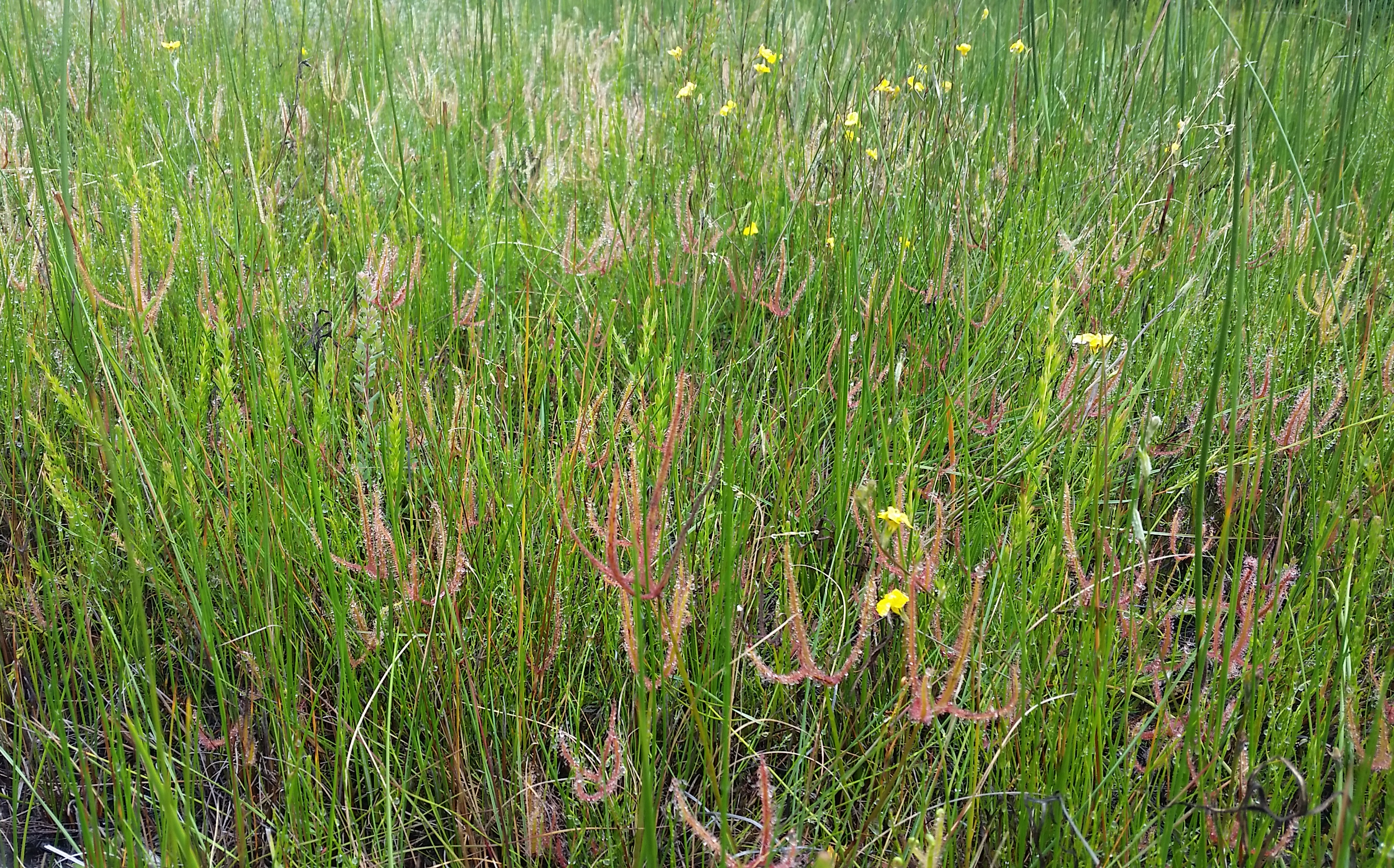
Vining sundew showing the round sticky traps along the vine and flowers. Photograph by Jean and Fred Hort via Flickr, used under a CC BY 2.0 license.

Wild Venus fly trap in a natural environment. Photograph by NC Wetlands via Flickr, in the public domain.

Venus fly traps being sold commercially. Photograph by Mike Mozart via Flickr, used under a CC BY 2.0 license.

A waterwheel plant (
Aldrovanda vesiculosa), which have snap traps and are closely related to Venus fly traps. This species is at risk in their native range but have been introduced into North America, where they may be invasive. This specimen was photographed at Fort AP Hill in New York, USA. Photograph by the U.S. Government, in the public domain.

Individual Aldrovanda nodes showing the whorl of leaves and snap traps. Photograph by David Short via Flickr, used under a CC BY 2.0 license.

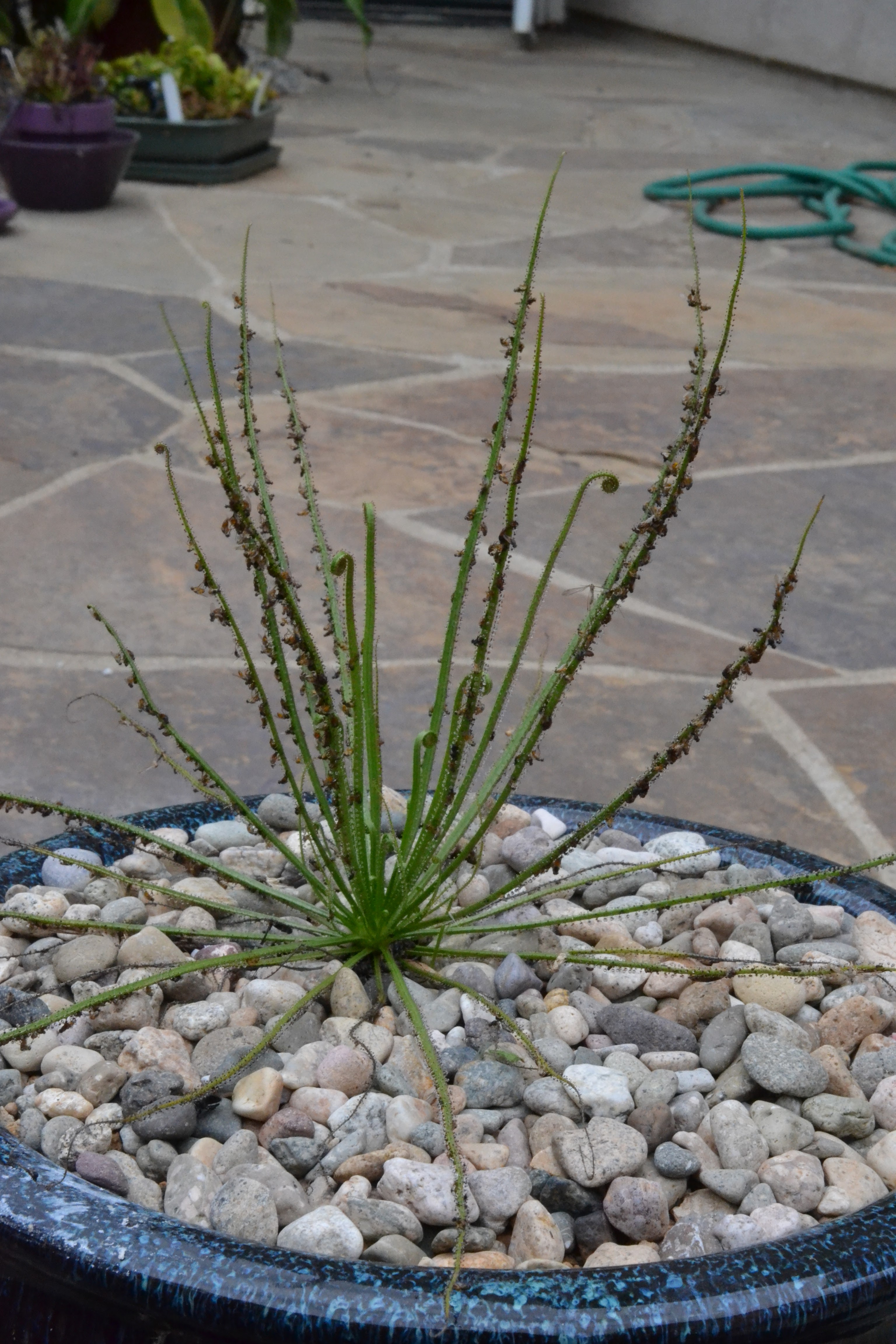
A young dewy pine (Drosophyllum lusitanicum) grown in culture. While this sticky-leaved plant may look like a sundew, they are only distantly related to one another. Photograph by incidencematrix via Flickr, used under a CC BY 2.0 license.

Abundant prey captured by a dewy pine. Photograph by incidencematrix via Flickr, used under a CC BY 2.0 license.

Young Triphyophylum plants showing the characteristic wavy primary leaves. Photograph by  Carel Jongkind via iNaturalist, used under a CC BY-NC 4.0 license.

Secondary carnivorous leaves of Triphyophylum. Photograph by Lotus-Salvinia.de via Flickr.

Tertiary leaves of Triphyophylum, note the the apical hooks. Photograph by  Carel Jongkind via iNaturalist, used under a CC BY-NC 4.0 license.


Questions? Comments? 

Follow the show on Twitter @Arthro_Podshow

Follow the hosts on Twitter @bugmanjon@JodyBugsmeUNL, and @MSkvarla36


Get the show through Apple PodcastStitcherSpotify, or your favorite podcatching app!
If you can spare a moment, we appreciate when you subscribe to the show on those apps or when you take time to leave a review!


Subscribe to our feed on Feedburner!  


This episode is freely available on archive.org and is licensed under Creative Commons: By Attribution 3.0. http://creativecommons.org/licenses/by/3.0/

Tuesday, June 28, 2022

Arthro-Pod EP 116: The Splendor of Fireflies

Join the Arthro-Pod gang as they get together to talk about the many insects that are taking over summer 2022 in their respective states and the stress that comes with them. But instead of lamenting, they decided to talk about an insect they love and hope you do to, the firefly. We cover the different names these glowing insects can have, their relatives, how they glow and why! Join us won't you?

An adult firefly waiting for dusk to settle in so it can begin to flash their bioluminescent light


Show Notes:

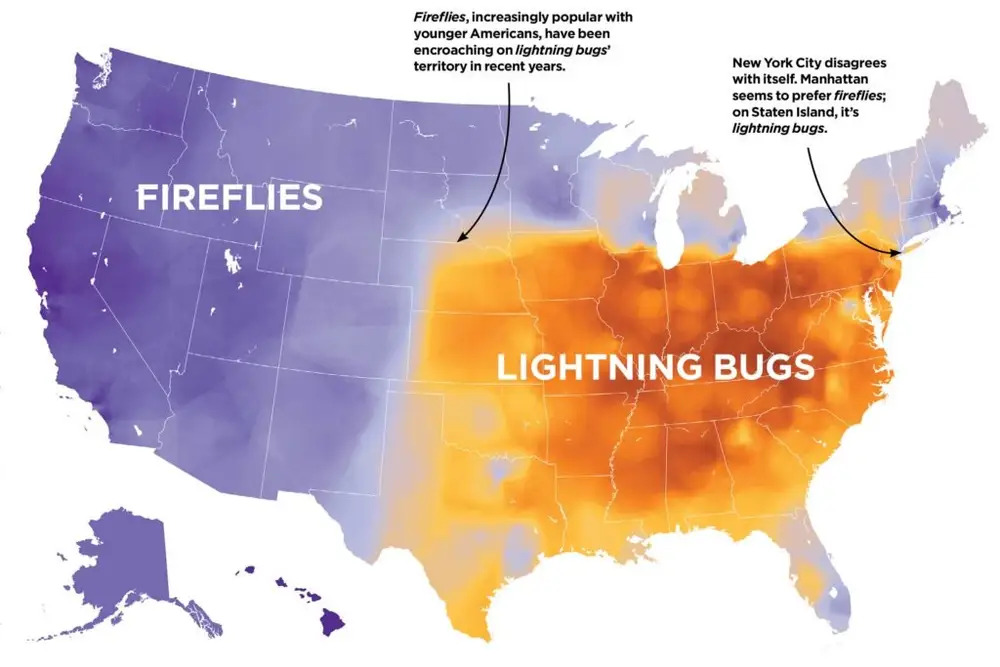
What do you call the insects that have a glowing rear end? There is data and some maps about the differences in regional names for the US associated with fireflies. 


Here is a chart that helps to separate out the various patterns that you might see in the night in the Eastern US

Femme fatale fireflies and the acquisition of biochemical defenses

The story of collecting fireflies for a penny bounty

How to build firefly habitat in a backyard

If you would like to read a great book all about these nocturnal wonders, we highly recommend this one:
https://ugapress.org/book/9780820348728/fireflies-glow-worms-and-lightning-bugs/

Questions? Comments? 

Follow the show on Twitter @Arthro_Podshow

Follow the hosts on Twitter @bugmanjon@JodyBugsmeUNL, and @MSkvarla36


Get the show through Apple PodcastStitcherSpotify, or your favorite podcatching app!
If you can spare a moment, we appreciate when you subscribe to the show on those apps or when you take time to leave a review!


Subscribe to our feed on Feedburner!  


This episode is freely available on archive.org and is licensed under Creative Commons: By Attribution 3.0. http://creativecommons.org/licenses/by/3.0/


Beginning/ending theme: "There It Is" by Kevin MacLeod (incompetech.com) Licensed under Creative Commons: By Attribution 3.0


Tuesday, June 21, 2022

Arthro-Pod EP 115: Bed bugs in poultry houses with Maria Gonzales-Morales

At the National Conference on Urban Entomology in May, Jody was inspired by Maria Gonzalez-Morales, a grad student from North Carolina State University, and asked for a chance to interview her! She graciously jumped to the mic and the two of them talked about how urban pests have an impact on agriculture. Maria has spent her time during her PHD studying insecticide resistance and in this interview discusses her work specifically with bed bugs in poultry farms. Maria also talks about her dream for the future, which involves creating an inclusive place for Hispanics to learn and be impowered by the information generated from the entomological research around the world. Take a listen. You won’t be disappointed. 

Maria and her national award! Congratulations to her!!

Tuesday, May 31, 2022

Arthro-Pod EP 114: For the Love of Aphids with Kait Chapman

While traveling to a conference in Salt Lake City, UT from Nebraska, Jody realizes that she doesn't know much about her colleague, Kait Chapman. To her surprise and glee, they get into talking about Kait's MS/PhD research which is all about the fabulous insect-plant interactions involved in the relationship between aphids and their host plants. Take a listen to a discussion about animal-loving beginnings, telescoping generations, aphids on tiny bungee cords, host plant responses, and the love-hate relationship between a grad student and her subject insect.


In this closeup of a mama aphid, you can see her offspring inside of her. Those small dots are the eyes of the aphid she will birth. 


A side by side look at aphid tolerant (L) and aphid susceptible (R) varieties of soybeans
Aphids can create symptomatic damage like curled leaves, wilting, and copious amounts of honeydew.


This cabbage aphid is coated in a white wax material. You can also see it is exuding an alarm pheromone (the yellow colored droplet)

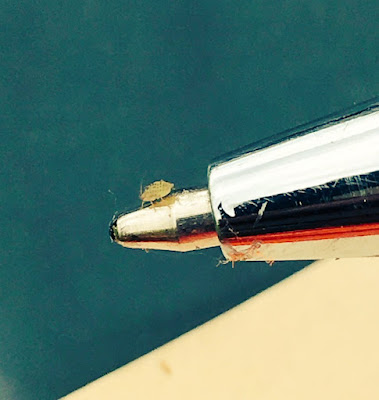
Aphids are also quite small, though they add up when in big groups!


This aphid is wired and ready for EPG

Questions? Comments? 

Follow the show on Twitter @Arthro_Podshow

Follow the hosts on Twitter @bugmanjon@JodyBugsmeUNL, and @MSkvarla36


Get the show through Apple PodcastStitcherSpotify, or your favorite podcatching app!
If you can spare a moment, we appreciate when you subscribe to the show on those apps or when you take time to leave a review!


Subscribe to our feed on Feedburner!  


This episode is freely available on archive.org and is licensed under Creative Commons: By Attribution 3.0. http://creativecommons.org/licenses/by/3.0/


Beginning/ending theme: "There It Is" by Kevin MacLeod (incompetech.com) Licensed under Creative Commons: By Attribution 3.0


Wednesday, May 18, 2022

Arthro-Pod EP 113: Why do people want kill praying mantises?


The Arthro-Pod gang have had a weird influx of questions from people about how they can best kill Chinese mantises. There has been a lot of concern regarding how they might be invasive and their effects on native species. Join us as we dive in to a complicated topic of parsing through native, non-native, and invasive species and highlight the biology of mantises plus the ways they normally capture our attention. With Chinese mantis, why the hate? What part might anti-Asian sentiment play in the attempts to control them? All that and more in episode 113!

An adult Chinese mantis, wondering what the heck we're talking about
Photo by Whitney Cranshaw, Colorado State

Show notes:

Here are some articles highlighting the controversy

https://www.brandywine.org/conservancy/blog/invasive-mantis-species 

https://www.insidescience.org/news/lessons-about-love-and-invasion-americas-foreign-mantises

Questions? Comments? 

Follow the show on Twitter @Arthro_Podshow

Follow the hosts on Twitter @bugmanjon@JodyBugsmeUNL, and @MSkvarla36


Get the show through Apple PodcastStitcherSpotify, or your favorite podcatching app!
If you can spare a moment, we appreciate when you subscribe to the show on those apps or when you take time to leave a review!


Subscribe to our feed on Feedburner!  


This episode is freely available on archive.org and is licensed under Creative Commons: By Attribution 3.0. http://creativecommons.org/licenses/by/3.0/


Beginning/ending theme: "There It Is" by Kevin MacLeod (incompetech.com) Licensed under Creative Commons: By Attribution 3.0