Showing posts with label beneficial insects. Show all posts

Friday, June 20, 2025

Arthro-Pod Ep 181 The Role of Beneficial Insects in Pest Management

Mike and Jody discussed natural enemies or arthropod predators out in the garden that help us with pest management. Here are images of some beneficial arthropods mentioned in the episode. 

Syrphid flies are also called hoverflies or flowerflies. Their adults are pollinators, while larvae perform different roles in the ecosystem. In these images, various syrphid fly larvae can be found where aphids are plentiful. Photo credit: J. Green

A predatory stink bug, the spined soldier bug is a generalist predator that may help out with insect pests, but they can also prey on things we like, including the monarch caterpillars. Photo credit: J. Green

Predatory hemipterans in the garden are generalist predators and may feed on pests, parasitoids, and pollinators. Photo credit: J. Green

Green lacewings can bee seen in all life stages around the landscape. Photo credit: J. Green

Brown lacewings do not lay their eggs on thin stalks, but their larvae are good aphid predators. Photo credit: J. Green

Both social and solitary wasps feed their larvae protein, usually in the form of invertebrates like caterpillars. Solitary wasps provision their nests with prey before laying an egg. Photo credit: J. Green


Ants play many roles in the ecosystem - if you see ants on your plants, you likely have a population of aphids. Photo credit: J. Green


Robber flies perch and actively hunt prey. Photo credit: J. Green

Wheel bugs in various life stages. Photo credit: J. Kalisch (eggs), J. Green

Seeing lady beetles/ladybugs may indicate a pest invasion on trees and plants, but ground beetles such as rove beetles and caterpillar hunters prey on a variety of small invertebrates crawling around the landscape. Photo credit: J. Green

Spiders are generalist predators, and may be active hunters like jumping spiders or sit-and-wait predators like the crab spider. Photo credit: J. Green 

Get the show through Apple Podcast, Spotify, or your favorite podcatching app!


Tuesday, June 28, 2022

Arthro-Pod EP 116: The Splendor of Fireflies

Join the Arthro-Pod gang as they get together to talk about the many insects that are taking over summer 2022 in their respective states and the stress that comes with them. But instead of lamenting, they decided to talk about an insect they love and hope you do to, the firefly. We cover the different names these glowing insects can have, their relatives, how they glow and why! Join us won't you?

An adult firefly waiting for dusk to settle in so it can begin to flash their bioluminescent light


Show Notes:

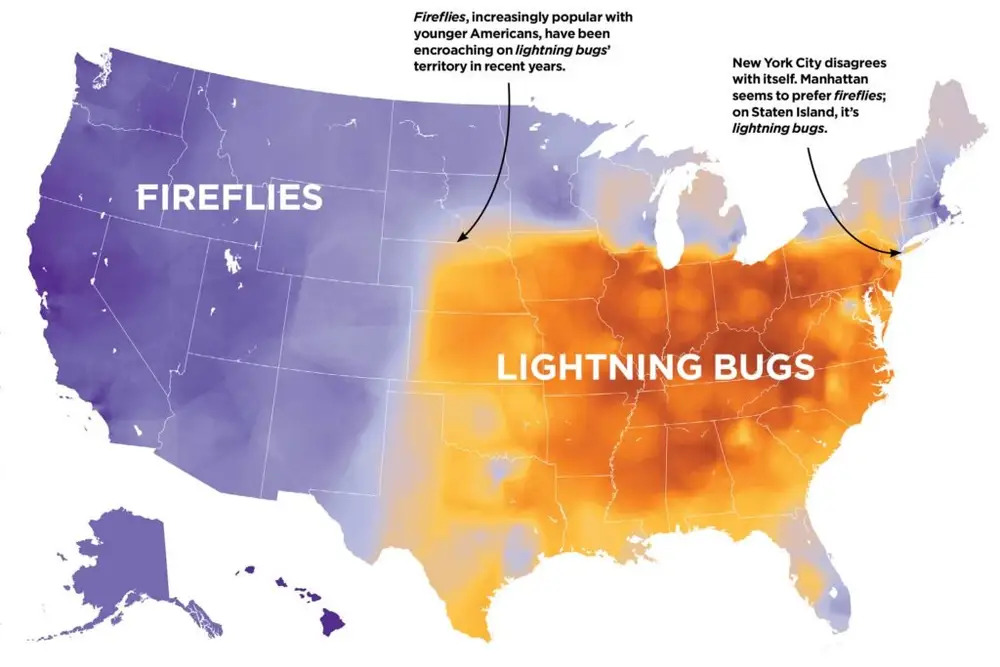
What do you call the insects that have a glowing rear end? There is data and some maps about the differences in regional names for the US associated with fireflies. 


Here is a chart that helps to separate out the various patterns that you might see in the night in the Eastern US

Femme fatale fireflies and the acquisition of biochemical defenses

The story of collecting fireflies for a penny bounty

How to build firefly habitat in a backyard

If you would like to read a great book all about these nocturnal wonders, we highly recommend this one:
https://ugapress.org/book/9780820348728/fireflies-glow-worms-and-lightning-bugs/

Questions? Comments? 

Follow the show on Twitter @Arthro_Podshow

Follow the hosts on Twitter @bugmanjon, @JodyBugsmeUNL, and @MSkvarla36


Get the show through Apple Podcast, Stitcher, Spotify, or your favorite podcatching app!
If you can spare a moment, we appreciate when you subscribe to the show on those apps or when you take time to leave a review!


Subscribe to our feed on Feedburner!  


This episode is freely available on archive.org and is licensed under Creative Commons: By Attribution 3.0. http://creativecommons.org/licenses/by/3.0/


Beginning/ending theme: "There It Is" by Kevin MacLeod (incompetech.com) Licensed under Creative Commons: By Attribution 3.0


Tuesday, August 17, 2021

Arthro-Pod EP 94: Talking Ants in August


In this episode we talked about ants! 

 Just a note, the Arthro-pod team had a pre-chat and practiced gratitude before getting into the ants, so if you want to bypass our personal updates, forward to about the 10-minute mark.  

 Some of the things we talked about topics like classification of ants, ants and communism, ants as pests, ants as aphid farmers, ants as beneficial insects, keeping ants as pets, the importance of identifying ants, how baiting works, and how to manage the ants thoughtfully and creatively in your urban landscape.  

Field ant carrying an asparagus beetle larva away. Photo by Jody Green, Nebraska Extension.

 Some of the ants we mention include Eastern black carpenter ants, small carpenter ants, acrobat ants, citronella ants, pavement ants, odorous house ants, Argentine ants, fire ants, and the extinct hell ants.  

Citronella ants can be a common sight in and around the home. They really do smell like citronella! Photo by Jody Green, Nebraska Extension


Show notes

We love ants and could have gone on for many episodes, but if you want to know more about ants, check out some of the resources we enjoy.  

AntWeb: https://www.antweb.org  

Ants of North America: A guide to the Genera:   

 Urban Ants of North America and Europe:  


There are many ant bait options on the market if you are looking to manage ants in and around the home. Photo by Jody Green, Nebraska Extension

Universities studying ants:  

Lucky Lab at University of Florida: https://andrealucky.com/  

Moreau Lab at Cornell University: https://www.moreaulab.entomology.cornell.edu/  

Ant Photos by Alexander Wild: https://www.alexanderwild.com/Ants  

Pavement ants engaged in a battle over territory. Who will win this particular sidewalk?! Photo by Jody Green, Nebraska Extension. 

Questions? Comments? 
Follow the show on Twitter @Arthro_Podshow

Follow the hosts on Twitter @bugmanjon, @JodyBugsmeUNL, and @MSkvarla36

Get the show through Apple Podcasts!

Subscribe to our feed on Feedburner!  


We're also on Stitcher!

This episode is freely available on archive.org and is licensed under Creative Commons: By Attribution 3.0. http://creativecommons.org/licenses/by/3.0/


Beginning/ending theme: "There It Is" by Kevin MacLeod (incompetech.com) Licensed under Creative Commons: By Attribution 3.0

Tuesday, October 31, 2017

Arthro-Pod Episode 33: The Horror of Parasitoid Insects!


Hi there bug lovers and welcome to our Halloween special! Today, Jody and Jonathan are featuring parasitoids, one of the most fascinating groups of insects! Their life cycles lend themselves to Halloween discussion as they are often reminiscent of the Alien in Alien, devouring victims from the inside out. 


Aphid mummies caused by a parasitoid braconid wasp (Photo Jody Green; UNL)

In the show we discuss the differences between parasites and parasitoids but here are some easy definitions if you are curious: 


Parasites: lives off another’s (host) benefits by deriving nutrients at host’s expense giving nothing in return

Some examples
External: leech, lice, fleas, ticks, mites
Internal: tapeworm, protozoan that transmits Malaria via mosquito vector, horsehair worms

Here is a horsehair worm leaving a mantis

Parasitoid: Usually insects that undergo complete metamorphosis such as wasps and flies, where the female lays eggs in or on the host and the larvae behaves like an internal parasite, developing using the host’s body for nutrients, but eventually kills the host by through the developmental process. 

Some examples
Parasitoid
Host
Description
Appearance
Braconid wasp
(Braconidae)
Sphingid caterpillar (Spingidae)

Eggs laid & free living in side hemolymph, emerge & spin cocoon on outside of caterpillar
Hornworm caterpillar has hundreds of larvae or cocoons on the outside of its body. Wasp is very small.
Aphidius sp.
(Braconidae)
Aphids (Aphididae)
Eggs laid on aphid, grows inside, killing it, pupation creates the mummy form, chews hole out of the rear end
In the same place where aphids are found, aphid mummies are swollen, tan, papery spheres with cornicles. Tiny wasps among aphids.
Emerald wasp/Jewel wasp (Ampulicidae)

American cockroach
(Blattidae)
Sting thoracic ganglion to paralyze, then sting head to disarm escape reflex, chews off half of each antenna, guides cockroach to burrow
Wasp is found in Asia & Africa. Metallic blue color, 2nd & 3rd pair of legs are bright red & enlarged
Scolioidea (Scoliidae)
Scarab beetles/white grubs, Japanese beetles (Scarabaeidae)
Burrows in ground to look for larvae, spins cocoon underground, locates host by kairomones like hydrocarbons, feces
Wasp has stout body, bright colors, black & yellow.
Cicada killer wasps (Crabronidae)
Cicada
(Cicadidae)
Catch cicada using sounds, provision burrows with paralyzed cicadas, overwinter as larvae, pupate in spring, emerge as adults in summer (no adults overwinter)
Largest wasp, often close to wooded area where cicadas can be found, females are very large solitary, males territorial but only has pseudo stinger.
Velvet ant
(Mutillidae)
Cicada killer
(Crabronidae)
Lay egg in nest cell of cicada killer when larvae pupates it consumes pupae (Hyperparasite)
Bright colors, females lack wings, coarse hair
Ichneumonid wasp
(Ichneumonidae)
Coleoptera, Lepidoptera, Hymenoptera  grub, larva or pupae
Inject eggs into hosts bodies or in larvae of other icheunmonids (Hyperparasite). Can use ovipositor to inject into wood boring larvae below bark
Slender waist, lots of antennal segments, some have long threadlike ovipositors
Tachinid fly
 (Tachnidae)
Caterpillars and other insect hosts

Robust fly with shiny or very hairy butt, feeds on flowers as adult

Emblemasoma sp. (Sarcophagidae)
Cicada
(Cicadidae)
Locates host by acoustically hunting male cicadas, drops 1-6 maggots at base of wings that burrow into body to feed, larvae use “oral hooks” to chew their way out to pupate in soil.
Flesh fly with red eyes, 3 dark stripes on thorax

Cicada killer wasp with hapless cicada victim (Photo Jody Green; UNL)

Not all parasitoids are wasps! Flies and beetles can parasitize as well! (Photo Jody Green; UNL)


Questions? Comments? 

Follow the hosts on Twitter @JLarson_UNL, @JodyBugsmeUNL, and @MSkvarla36

Get the show through iTunes!

Subscribe to our feed on Feedburner!  


We're on Stitcher too! 


This episode is freely available on archive.org and is licensed under Creative Commons: By Attribution 3.0. http://creativecommons.org/licenses/by/3.0/


Beginning/ending theme: "There It Is" by Kevin MacLeod (incompetech.com) Licensed under Creative Commons: By Attribution 3.0

Friday, April 24, 2015

Arthro-Pod Episode 12: Native Pollinator Buzz with Dr. Amber Vinchesi


Hey there bug people and welcome to today's show! Join us as we visit with Dr. Amber Vinchesi to learn about native pollinators and how to conserve them! Plus we have our pest profile starring odorous house ants and we learn about two new resources in the fight against invasive beetles. Tune in! 


Tuesday, December 2, 2014

Arthro-Pod Episode 6: The ESA Files!


Hello everyone and welcome to our 6th episode! This episode was recorded at the Entomological Society of America's national meeting and features 10 interviews with entomologists from around the country. Tune in if you want to know more about the exciting advances in bug research and education! 


Monday, September 15, 2014

Arthro-Pod Episode 1: Introduction to Insect-Human Relations


Hello everyone! Today you can listen to the very first episode of Arthro-Pod, the latest and greatest entomological podcast!

The show today is all about introductions as you get to hear about the mission for the podcast, learn a little bit about extension, and finally receive an introduction to the relationship between humans and insects.


Here are some links for those that are interested: 

Entomophagy

National Geographic article about what bugs to try

Insects as Future Food from the BBC

Art

Chinese ink paintings featuring insects

Mythology

The repository of all human knowledge will help you learn about Khepri, the sun god

Thanks for listening!

This episode is freely available on archive.org and is licensed under Creative Commons: By Attribution 3.0. http://creativecommons.org/licenses/by/3.0/

Beginning/ending theme: "There It Is" by Kevin MacLeod (incompetech.com) Licensed under Creative Commons: By Attribution 3.0

Intermission music: "Honeybee" by Kevin MacLeod (incompetech.com) Licensed under Creative Commons: By Attribution 3.0


Questions? Comments? 

Email: unl.jonathanlarson@gmail.com

Follow the show on Twitter

Subscribe to our feed on Feedburner!  

Books used for this episode


The Practical Entomologist


Bugdacious Tales